Intelligent Anomaly Detection for GDR Probes
Detect changes earlier, alarm more reliably
Monitoring networks consisting of probes such as MIRA form the backbone of many radiological early warning systems worldwide. They continuously monitor the ambient gamma dose equivalent rate H*(10) and are intended to detect unusual changes as quickly as possible.
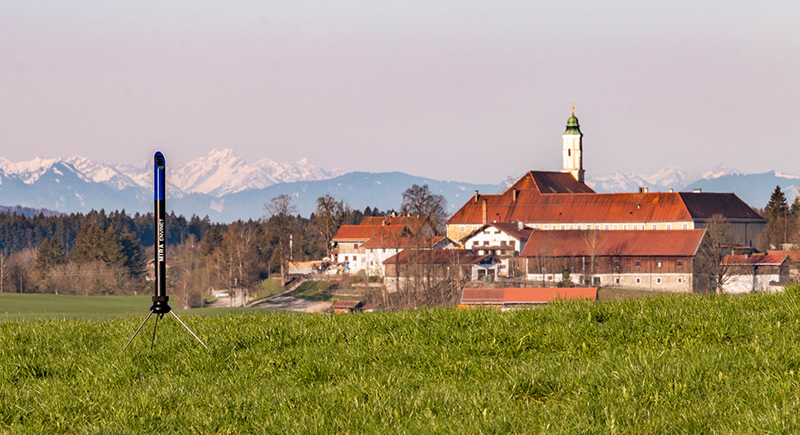
Mobile GDR probe MIRA
One of the greatest challenges is that the natural radiation background is not constant. Weather events such as precipitation can cause significant changes in the ambient dose equivalent rate within just a few minutes. Depending on the location and ambient environmental conditions, these natural fluctuations can be significant, over both short periods and longer time spans.
Conventional, fixed warning and alarm thresholds can only take such situation-dependent influences into account to a limited extent. This creates a trade-off: High thresholds detect changes late, while low thresholds trigger unnecessary alarms too frequently.
Dynamic Thresholds Instead of Fixed Limits
GDR:AI from Scienta Envinet reduces this trade-off to a minimum.
The new function uses historical measurement data, local weather data, and machine learning methods to learn the typical behavior of the natural ambient dose equivalent rate at a specific monitoring location. Based on this learned behavior and current weather data, GDR:AI then predicts a dynamic expected range for the current GDR measurement value.
If a measurement value lies within this range, it corresponds with a high probability to the expected natural behavior. If it lies outside the range, the system identifies a statistically significant deviation that indicates a possible artificial increase which should be evaluated further.
Instead of using a single static alarm threshold, GDR:AI therefore uses dynamic, location- and situation-dependent criteria, or supplements the existing criteria accordingly.
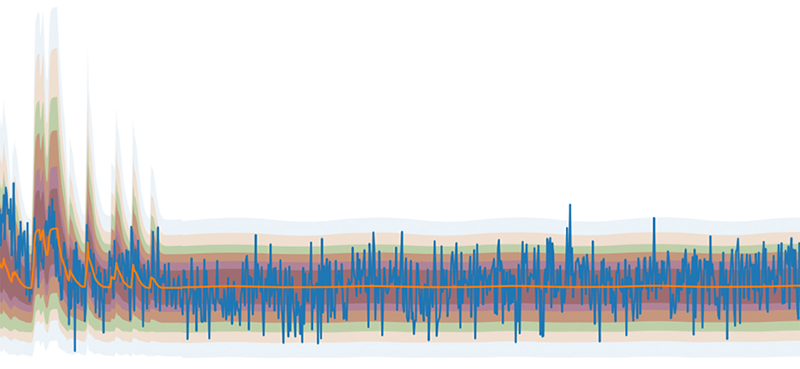
Principle of GDR:AI: Prediction of probability intervals for the GDR measurement value using weather data
Higher Sensitivity – Lower False Alarm Rate
In a real application example, the additional increase in dose rate above the expected natural background required for complete detection of the investigated anomalies in a 10-minute interval could be reduced from 84 nSv/h to 25 nSv/h. This was based on a statistically expected false alarm rate of one alarm per year.
Sensitivity and false alarm detection can be configured according to the requirements of the respective monitoring network. For example, a lower false alarm rate can be set if a somewhat reduced sensitivity is acceptable. Conversely, the detection sensitivity can be increased if a higher number of statistical anomalies can be tolerated.
The robust algorithm is designed to detect both sudden changes and slowly increasing deviations in the ambient dose equivalent rate.
Integrated into NMC
GDR:AI is integrated into the DAISY module of the NMC monitoring network control center. This allows anomaly detection to be used directly within the existing system environment.
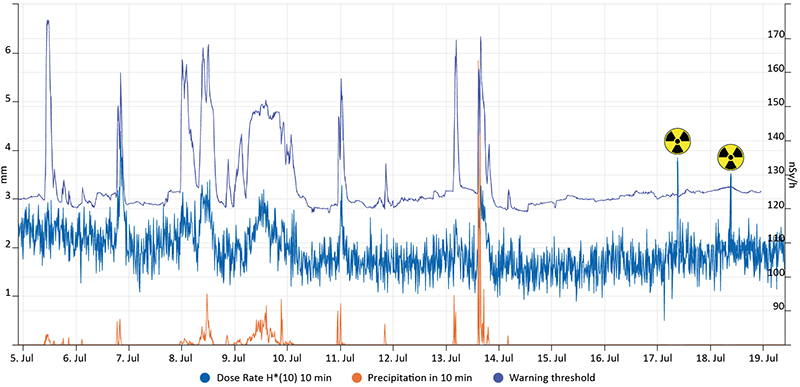
Real example from NMC: The dynamic threshold takes precipitation-induced increases into account. The changes caused by radioactive sources towards the end of the measurement series exceed the expected range and trigger a warning.
With GDR:AI, a conventional GDR monitoring network becomes a more intelligent early warning system: Natural fluctuations can be evaluated more effectively, unusual changes can be detected earlier, and false alarms can be reduced.
▷ GDR:AI is available NOW
Would you like to learn more? Then contact our experts at
Best regards
Your Scienta Envinet Team